
Both are still active, free-to-join print-on-demand marketplaces — you upload art, they print, ship, and handle support. The numbers changed on both platforms in 2025: Redbubble now charges a tiered platform fee (0-50% of your earnings, on top of your margin) introduced September 2025, based on your account tier. Society6 updated its royalty structure in March 2025 — still a 10% baseline on most products, with self-set pricing on art prints, and (in your favor) shipping fees no longer deducted from what you earn. Redbubble still wins on volume, stickers and royalty control; Society6 still wins on home decor range and the interior-design buyer. Most sellers who take POD seriously still run both.
Society6 and Redbubble look almost identical from the outside: upload a design, it goes live on dozens of products, you earn a cut per sale. The buyer audiences, the product ranges, and — as of 2025 — the fee structures on each platform are different enough that "just pick one" isn't quite the right question anymore.
Both platforms changed how they pay artists within a few months of each other in 2025. If you last checked the numbers before then, some of what you know is out of date. Here's the current picture, checked against both platforms' own help documentation in September 2026.
How both platforms still work
The core model hasn't changed: create a free account, upload artwork, and your designs become available on a catalog of products. When someone buys, the platform handles production, shipping and most customer service, and pays you a cut monthly above a minimum payout threshold. Neither charges to list, and neither requires you to hold inventory — you're investing design time, not money.
Redbubble's royalty and new platform fee (changed September 2025)
On Redbubble you still set your own margin on top of the base manufacturing price — typically 10-30%, defaulting to 20%. That part hasn't changed. What's new: since 1 September 2025, Redbubble also charges a platform fee based on which of three account tiers you're in:
| Tier | Platform fee | Who it's for |
|---|---|---|
| Standard | 50% of monthly earnings | New and lower-volume accounts |
| Premium | 20% of monthly earnings | Established, more active sellers |
| Pro | 0% (exempt) | Top sellers and Artist Ambassadors |
The fee only applies when you make a sale (no sales, no fee) and is capped at $150 per payment period for Standard and Premium accounts, so it isn't unlimited downside on a strong month. Redbubble hasn't published exact numeric thresholds for tier advancement — it's based on sales volume and account activity that Redbubble doesn't fully disclose. The practical effect: a brand-new Redbubble shop keeps meaningfully less of its margin than the "set your own 20%" pitch used to imply, until the account tier improves.
If you're starting from zero on Redbubble in 2026, budget for the Standard tier's 50% platform fee eating into your margin at first, not the full 20% you set. This is a real change from how the platform worked before September 2025 — most articles still floating around online predate it.
Society6's royalty structure (changed March 2025)
Society6's update, effective 18 March 2025, kept the baseline familiar but changed some of the fine print. The 10% markup baseline still applies to most standard products (pillows, wall tapestry, framed art and similar categories). Art prints, framed prints and canvas prints still let you set your own price above Society6's base, so your effective royalty on those can run well above 10%. Trade, wholesale and marketplace orders pay a 5% net-sale commission — lower than the retail-channel rate, but those are typically bulk or B2B orders you wouldn't otherwise get.
The seller-favorable change: for orders placed after 18 March 2025, artist shipping fees are no longer deducted from artist earnings. That's a real improvement to take-home pay on the standard-royalty categories, even though the headline 10% number looks unchanged.
Product catalog compared
| Category | Redbubble | Society6 |
|---|---|---|
| Stickers | Market leader | Limited selection |
| Art prints | Strong, active category | Premium quality, larger sizes, self-set pricing |
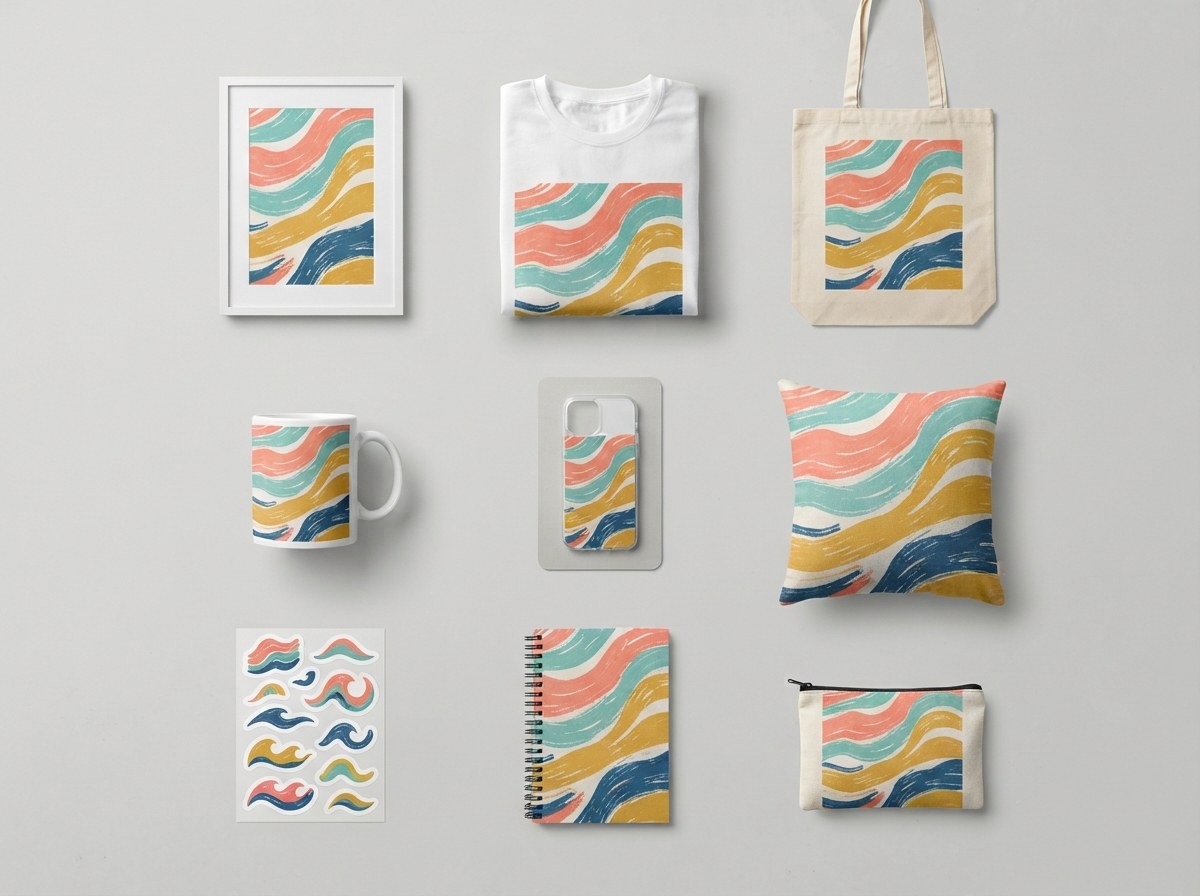
| Home decor | Available | Core focus: tapestries, rugs, pillows, duvet covers |
| Apparel | Higher volume, more sizes/styles | Available, smaller audience |
| Phone cases | Consistent demand | Available |
| Textiles / furnishings | Not a core category | Duvet covers, shower curtains, rugs — no Redbubble equivalent |
Society6's home-furnishing range still has no real Redbubble equivalent — wall tapestries, duvet covers, shower curtains, area rugs. If your work suits interiors, that's still Society6's clearest advantage over Redbubble, regardless of the fee changes.
The buyer audience hasn't shifted
Redbubble's buyers still skew younger, more pop-culture and fandom-driven, with impulse purchases at lower price points — stickers, fan art, text-based apparel. Society6's buyers still skew toward home decorators and art collectors making more considered, higher-ticket purchases: botanical work, abstract painting, photography, geometric patterns. Neither audience is "better" — they're different, and the platform fee changes don't alter which audience finds which kind of work.
Mockups and listing images
Both platforms still auto-generate product previews when you upload. For art prints on either platform, a custom lifestyle photo — the print framed and shown in a real room — still consistently outperforms the default auto-generated preview, because it removes the guesswork of picturing the piece at scale in a real space.
The poster mockup guide covers room settings and framing choices that work well for wall art specifically. The free template library has poster and wall-art templates ready to use if you want to test a few room variations before committing to one listing photo.
On Society6 in particular, your art-print listing image is often the first thing a buyer sees in search or on a social share — a real room photo stops the scroll in a way a flat design preview rarely does. It's one of the cheapest ways to lift an existing listing's performance without touching the design itself.
Which platform should you start with in 2026?
If your work is sticker-friendly, fandom-adjacent or text-based, Redbubble is still the faster place to build volume and get real sales data — just plan around the new tiered platform fee rather than assuming you keep your full margin from day one. If your work is fine art, illustration, photography or abstract and suits a wall or a room, Society6 still gives you access to home-decor products Redbubble doesn't carry, plus self-set pricing on art prints.
The honest answer for most designers in 2026 is still the same as before the fee changes: list on both. Uploading to each platform takes roughly 30 minutes once you have a workflow, and the audiences barely overlap — running both doesn't meaningfully double your work.
Redbubble and Society6 remain more complementary than competitive, but the economics changed in 2025. Redbubble now takes a real bite out of new sellers' margins via the platform-fee tiers until your account earns Pro status — factor that in before assuming the "set your own 20%" pitch is the whole story. Society6's 10% baseline is unchanged, but shipping fees no longer coming out of your earnings is a quiet win. If your portfolio has range, both platforms still find buyers for different parts of it.
Lifestyle mockups for both platforms
Generate room-setting images for your art prints and wall art — works for Society6, Redbubble, Etsy, or anywhere else you sell.
Try Scaylr Free →Frequently Asked Questions
Last verified: 29 September 2026, against Redbubble's and Society6's own help documentation on account fees and artist earnings. Both help pages return an automated-access error to direct fetches, so the fee figures above were cross-checked against multiple independent citations of the same source articles, current as of this date.