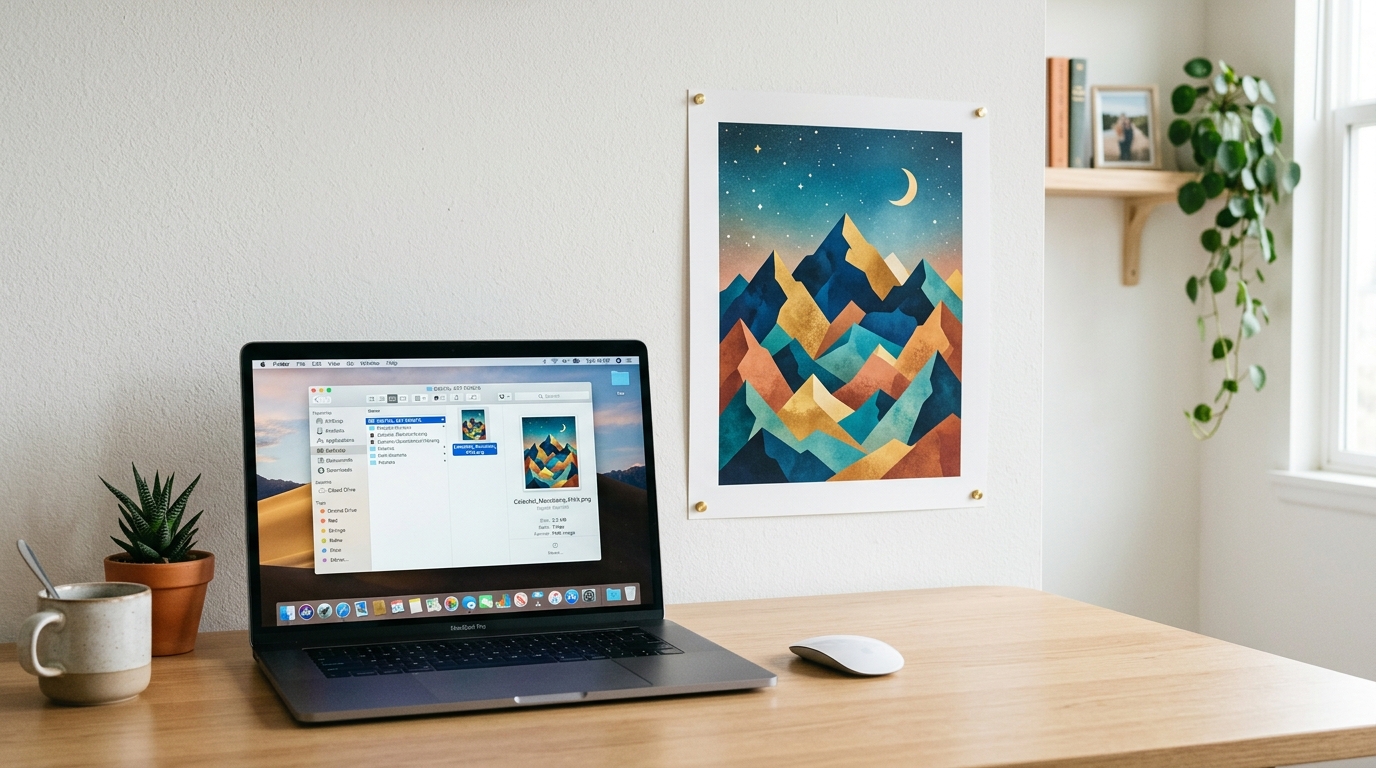
Digital downloads on Etsy are files the buyer receives instantly after purchase. No printing, no shipping, no stock. The margin is close to 100% after Etsy fees. What makes or breaks a digital listing is the same as physical: a good mockup that helps buyers picture the product in their life, and titles and tags that match what they're searching for. The file itself is the easy part.
You make something once, upload it, and Etsy delivers it automatically every time someone buys. No packaging, no trips to the post office, no wondering if the item arrived. For a lot of sellers, this is the model they wish they'd started with.
Digital downloads have their own challenges, mainly that you can't charge much for a single file and the best-selling niches are crowded. This guide covers how the model actually works, what sells, how to price it, and the mockup side that most guides skip over.
What counts as a digital download
Etsy allows sellers to list any file type as a digital product, delivered automatically to the buyer after purchase. In practice, most digital downloads fall into a few categories.
Printable art and wall prints — the buyer downloads a high-resolution image file (usually JPG or PDF) and prints it themselves. This is the largest category by volume on Etsy and includes everything from quote prints to botanical illustrations to abstract art.
Planners, journals, and organisers — PDF files designed to be printed at home or used digitally on tablets. Undated planners, habit trackers, budget spreadsheets, and meal planners all sell consistently.
Templates — Canva templates, PowerPoint decks, resume templates, invitation templates. The buyer gets a link or file they can customise. These tend to command higher prices because the buyer is paying for functionality, not just a design.
SVG and cut files — vector files for Cricut and Silhouette cutting machines. A well-designed SVG file can sell thousands of times. The craft community on Etsy is large and loyal.
Fonts and graphics — typefaces, clip art, watercolour sets, texture packs. Commercial licensing matters here. Buyers often want to use these in their own products and will ask about usage rights before purchasing.
Patterns and instructions — sewing patterns, knitting patterns, woodworking plans. These sell to people with a specific project in mind, which means buyer intent is high and returns are low.
Etsy allows up to 5 files per listing, each up to 20MB. For high-resolution printable art, a single PDF can exceed this. The workaround most sellers use is to host the file externally (Google Drive, Dropbox, or a personal site) and deliver the download link in a PDF. The PDF is the listing file; the link inside it goes to the actual artwork.
Why digital downloads attract sellers
Once a digital listing is live, Etsy handles delivery automatically. The buyer pays, Etsy sends them the file, and you see the money in your account. You don't need to be online. You don't need to check anything. A listing you created two years ago can still generate sales today if it's ranking well.
Margins are high. After Etsy's listing fee ($0.20), transaction fee (6.5%), and payment processing (roughly 3%), most of what you charge goes to you. There's no cost of goods, no shipping, no supplier to pay.
The trade-off is that files can be screenshot, forwarded, or resold illegally once they're out there. Digital piracy on Etsy is real and there's limited recourse. Most sellers accept this as a cost of doing business rather than building their whole strategy around avoiding it.
What actually sells
The best-selling digital download niches share one trait: the buyer has a specific need they're trying to fill right now. Someone planning a wedding, organising their home, decorating a nursery, or running a small business. Seasonal demand also drives a lot of digital sales: Christmas wall art, Halloween printables, back-to-school planners.
Generic designs in generic niches are the most common reason digital shops stagnate. "Motivational quote print" has enormous competition. "Motivational quote print for female entrepreneurs with a dark academia aesthetic" is a smaller audience with far less competition, and buyers who know exactly what they want.
Specificity is the lever. The more precisely your product matches a buyer's mental image of what they're looking for, the better your listing converts when they find it.
Mockups for digital downloads
This is where most digital sellers underinvest, and it shows in their click-through rates.

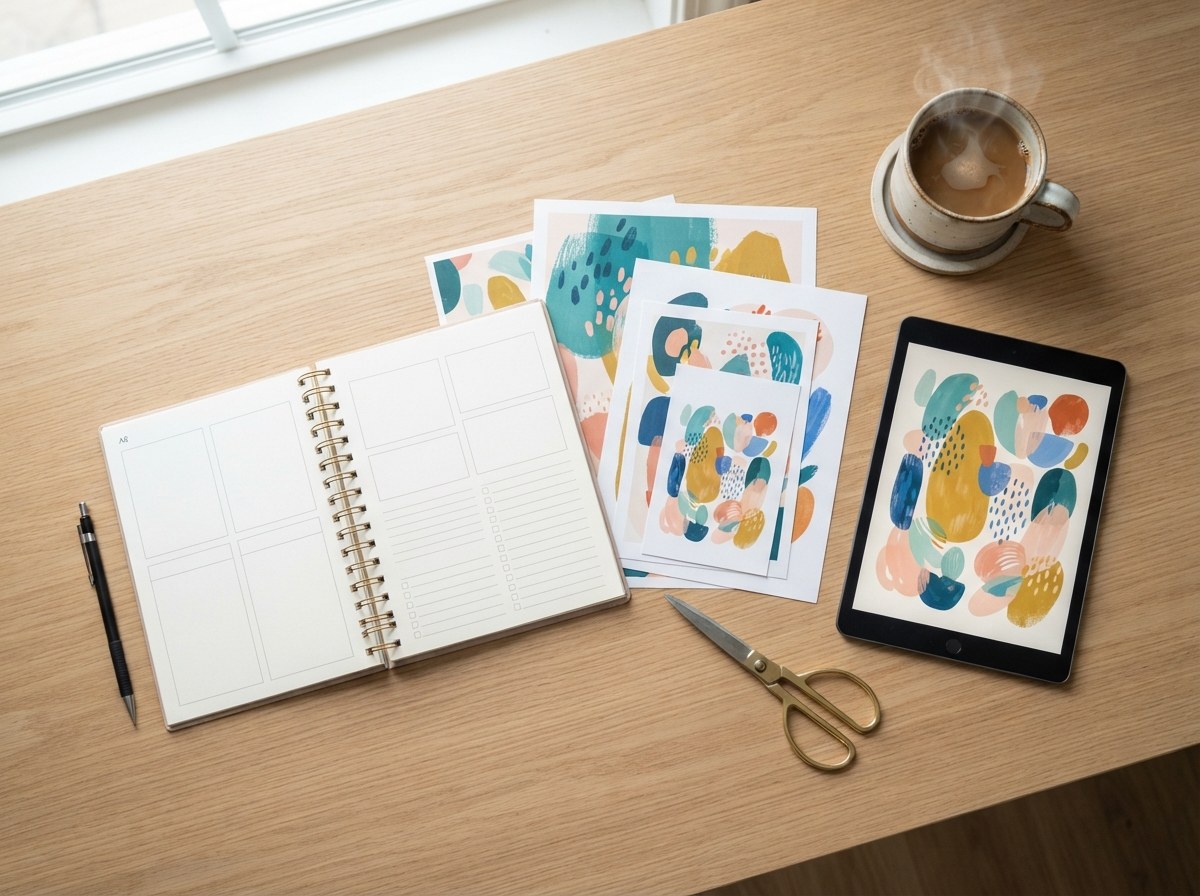
A digital product is intangible. The buyer can't hold it or see what it looks like in their home before purchasing. A plain screenshot of the file does almost nothing to help them imagine owning it. A mockup showing a printable art piece hanging on a wall in a styled living room, or a planner spread open on a desk with coffee and a pen nearby — those do the same job a physical product photo does for a tangible item.
For printable wall art in particular, the mockup is doing extra work. The buyer needs to visualise the print at actual size on their wall. A lifestyle photo showing it framed and hung in a real room removes a huge amount of uncertainty. Without that, buyers are guessing at scale and whether it will look right, and some of them guess wrong and leave.
The poster mockup guide covers the specific mockup types that convert best for wall art — room settings, frame styles, and the photo set structure for a full listing. The same principles apply to digital art prints as to physical ones, because the buyer's experience of the listing photo is identical either way.
Using a batch generator like Scaylr means you can run a digital print design through multiple frame styles and room settings quickly, then pick the strongest images for the listing. The free template library includes poster and wall art templates you can use without sourcing your own PSD files.
Include one mockup showing the file itself — a clean flat lay with the printed version next to a laptop or tablet displaying the digital version. This tells buyers that what they're getting is a file, not a physical product, before they reach the listing description. It prevents the single most common negative review on digital listings: "I didn't realise it wasn't a physical print."
Pricing digital downloads
Most printable art sells between $3 and $10. Most templates sell between $5 and $25. SVG bundles range widely — $3 for a single file, $15 to $30 for a bundle of 10 to 20 designs.
The instinct to price low to compete is understandable but usually wrong. A $2 printable triggers the same Etsy fees as a $7 one, leaving you with less per sale for the same amount of work. And low prices often signal low quality to buyers who don't know your shop yet.
Price relative to the value the buyer gets, not relative to what the file cost you to make. A $12 Canva wedding invitation template that saves someone 3 hours of work is priced correctly. The same file at $3 is leaving money on the table and attracting buyers who will demand more edits and leave worse reviews.
Bundles are a reliable way to increase average order value. A single planner page at $3 or a complete planner system with 20 pages at $12. Most buyers will choose the bundle if the price difference is reasonable.
SEO for digital listings
Etsy's search algorithm treats digital listings the same way it treats physical ones. Title, tags, and listing quality score all feed into where your product appears in results.
The difference with digital is that buyers often search for the use case rather than the product type. "Wall art for bedroom" rather than "printable art." "Wedding seating chart template" rather than "editable PDF." Think about what the buyer is trying to accomplish, not what you've made.
A reliable research method: search for your product on Etsy and note the autocomplete suggestions. Those are real searches buyers are making. Use them in your title and tags rather than phrases you invented.
For more detail on Etsy SEO, the Etsy SEO guide covers keyword research, tag strategy, and listing optimisation in full — most of it applies directly to digital listings too.
Common mistakes
No mockup, or only a plain screenshot. The mockup is the product photo. A flat white background with the file on it tells buyers almost nothing about whether they want it. Every digital listing needs at least one lifestyle image showing the product in context.
Not specifying the file format clearly. Buyers want to know before purchasing whether they're getting a JPG, PDF, SVG, or editable file. Put this in the title or the first line of the description. Ambiguity leads to refund requests.
Assuming digital means passive income from day one. New listings get very little visibility without clicks and purchases to signal to the algorithm that the listing is worth showing. The first sales on a new listing often need help — Etsy ads on a small budget, sharing to Pinterest, or promoting in relevant communities.
Pricing too low and burning out. At $2 per sale with Etsy's fees, you need 500 sales to make $700. At $8 per sale, you need 125. The math compounds significantly at scale. Start at a price you can sustain.
Digital downloads work best as a complement to a physical POD shop, or as a standalone business in a niche where the files genuinely save the buyer significant time or money. The sellers who do best treat the mockup as seriously as the file itself. On Etsy, the image is the first thing every buyer sees.
Make your digital listings look like physical products
Browse free poster and wall art mockup templates in the Scaylr library. Upload your digital print design and generate lifestyle photos for your listings in minutes.
Try Scaylr Free →