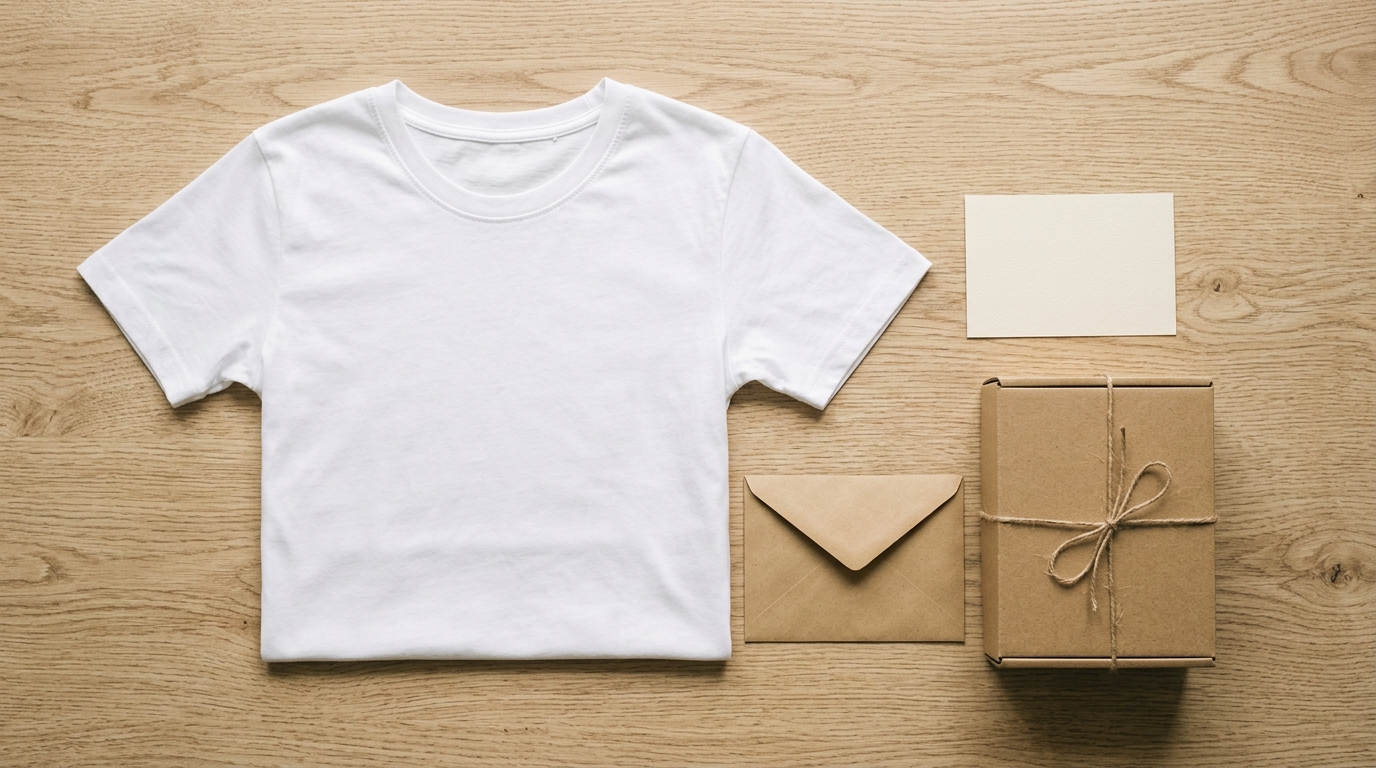
Print on demand means a supplier prints and ships products only when a customer orders them. You upload designs, list products in your shop, and collect the difference between what a customer pays and what the supplier charges you. No inventory, no upfront costs, no packing tape. The hard part is not the setup — it's getting people to find your listings in the first place.
Print on demand gets pitched as passive income, and technically it can be. But most people who try it and quit do so within the first few months because they listed 10 products, got no sales, and concluded it doesn't work. It does work — just not without effort on the design and marketing side.
This guide covers the full picture: how the model works, which platforms to sell on, how to pick a supplier, what to design, and what actually separates shops that grow from shops that stagnate.
How print on demand actually works
You create a design. You upload it to a POD platform, where it gets placed on a product — a mug, a t-shirt, a poster, a tote bag. You set a retail price. When a customer buys it, the platform charges your base cost, prints the item, and ships it directly to the customer. You keep the margin.
No inventory sits in your garage. Nothing gets printed until someone orders it. You never touch a box of stock.
The trade-off is margin. Because each item is produced individually rather than in bulk, your cost per unit is higher than it would be with traditional wholesale. A mug that costs $4 per unit in bulk might cost $7 through a POD supplier. You price accordingly, but there's a ceiling on what buyers will pay, and your margins are thinner than a traditional product business.
POD is not dropshipping in the traditional sense. You're not reselling someone else's existing products — you're putting your own designs on blank goods. The distinction matters for branding, for margins, and for what Etsy and other platforms allow.
Where to sell
Most beginners start with one of these and expand later.
Etsy is the default starting point for most POD sellers. The audience is already there, actively searching for unique products. Listing fees are low ($0.20 per listing). The downside is competition — popular niches are crowded, and getting visibility requires either good SEO or paid ads. Etsy takes a 6.5% transaction fee plus payment processing.
Redbubble and Society6 are marketplace platforms where you upload designs and they handle everything, including the shop. The convenience is real, but you have almost no control over pricing or branding, and the platforms take a large cut. Good for passive income with zero management overhead, not great for building a recognisable brand.
Merch by Amazon puts your designs in front of Amazon's enormous audience. The approval process is selective and tiered — you start with a low listing limit and earn more slots as you make sales. Worth pursuing if you can get in, but not something to count on as a starting point.
Your own website (Shopify, WooCommerce) gives you full control over margins and branding but comes with zero built-in traffic. You're responsible for every visitor. Most sellers add this later, after they've validated designs on an established marketplace.
Choosing a POD supplier
Your supplier determines print quality, shipping times, and product range. Two shops with identical designs can have completely different customer experiences depending on who's fulfilling the orders.
Printful integrates with Etsy, Shopify, WooCommerce, and most other major platforms. Print quality is consistently good. Prices are on the higher end, which squeezes margins, but the reliability is worth it when you're starting out and don't yet know what your return rate will be.
Printify works differently — it gives you access to a network of print providers rather than doing all production in-house. This means you can often find lower base prices, but quality varies between providers. Read reviews for specific providers before committing.
Gelato has a global network of print partners, which means shorter shipping distances for international orders. If you're targeting buyers in Europe or Australia, production closer to the customer means faster delivery and lower shipping costs.
Testing matters more than reviews. Order samples from any supplier before you start selling. What looks good on a product page doesn't always look good on the actual item, and a £9.99 sample order is cheap insurance against customer complaints.
Start with one supplier. It's tempting to use different suppliers for different product types, but managing multiple integrations, tracking which provider ships where, and dealing with returns across different systems adds complexity fast. Get one supplier working well before you add another.
What to design
Shops that grow have designs people actually want. Shops that stagnate usually have designs the seller likes but haven't checked against what buyers are actually searching for. There's a difference, and it shows up quickly in click-through rates.
Start with a niche, not a product type. "Mugs" is a product type. "Mugs for nurses who hate mornings" is a niche. The more specific you are, the less competition you face, and the easier it is to write listing titles and tags that match what buyers are already searching for.
Good niche criteria:
- People in the niche actively buy gifts for each other
- The niche has specific vocabulary (job titles, inside jokes, shared references) that works on printed products
- Search volume is real but the top sellers don't have hundreds of thousands of sales yet
Occupations, hobbies, and personality types all work well. "Dog mum," "nurse," "teacher," "introvert," "book lover" — these are identities people buy products to signal. A design that says something about who the buyer is tends to outperform a design that just looks nice.
Mockups — why they matter more than most beginners think
On Etsy, the search results page shows thumbnail images. That's it. No shop name, no description, no price at first glance. The image decides whether a buyer clicks or scrolls past.
POD suppliers generate automatic mockup photos when you create a product. They're functional, but every other seller using the same supplier gets the exact same photo style. Your listing looks identical to dozens of competitors before anyone reads the title.
Custom mockups change this. A lifestyle photo showing your mug on a kitchen counter in morning light, or your poster in a styled living room, gives buyers something to respond to emotionally rather than just a product against a white background. The design earns repeat purchases; the mockup earns the first click.
Generating these manually takes time. A batch mockup generator like Scaylr lets you run a design through multiple templates at once and download the full set as a ZIP — the same workflow that takes an hour per product in Photoshop takes a few minutes. The full guide to Etsy mockups covers the process in detail.
Etsy SEO basics
Etsy is a search engine as much as it is a marketplace. Buyers type what they want, and Etsy's algorithm decides which listings to show. Getting found is about matching what buyers type, not just describing what you've made.
Your title, tags, and description all feed the algorithm. Use the specific phrases buyers search for, not poetic product descriptions. "Funny nurse mug gift for her" performs better as a title than "Hand-picked ceramic vessel for the medical professional in your life."
Search for your product on Etsy before listing it. Look at the titles of the top-selling listings. Note the phrases they use. That's your keyword research, and it costs nothing.
Tags are 13 fields, each up to 20 characters. Use all of them. Don't repeat your title exactly — use related phrases, synonyms, and longer or shorter versions of the same idea. "Nurse gift," "nurse mug," "gift for nurse," "RN gift," "funny nurse" all work as separate tags for the same product.
Pricing your products
Thin margins are the biggest structural problem with POD. The math has to work before you list anything.
Base cost (supplier charge) + Etsy fees (listing + transaction + payment processing) + your profit = retail price. A mug with a $7 base cost plus roughly $2 in Etsy fees needs to sell for at least $16-18 to leave you with a meaningful margin after occasional returns or shipping problems are factored in.
Beginners often price too low trying to compete. Undercutting established sellers with thousands of reviews rarely works — buyers don't always choose the cheapest option, and a lower price signals lower quality. Price at market rate and compete on design and listing quality instead.
The full POD pricing guide covers the fee structure in more detail, including how to work backwards from a target margin.
The first 90 days
Most new POD shops see no sales in the first few weeks. That's not failure — it's the algorithm taking time to index your listings and gather enough data to start showing them in search results. Etsy needs signals (clicks, favourites, purchases) before it will rank a new listing. Those signals take time to accumulate.
What helps in the early stage:
- List consistently — 2 to 3 new products per week rather than 50 at once and then nothing
- Share listings on Pinterest — POD products do particularly well there because Pinterest is visual and the content stays discoverable for months
- Respond to any messages or reviews quickly — Etsy's algorithm rewards shops with good customer service scores
- Use Etsy ads on 1 or 2 listings once you have 10+ products — small budgets ($1-3/day) can give the algorithm the initial click data it needs
Shops that make consistent sales usually have 50 to 100+ listings. Getting there takes time, and every listing is another chance to appear in search results for a different query.
Common mistakes worth avoiding
Designing for yourself rather than buyers. Your taste is a starting point, not the destination. What sells well in POD is usually niche-specific, slightly irreverent, and readable at a glance.
Skipping the sample order. A design that looks perfect in the mockup can print with unexpected colour shifts or alignment issues. Order before you sell.
Ignoring the mockup photos. Supplier-generated photos are a floor, not a ceiling. Shops that invest in better listing images consistently outperform those that don't.
Spreading too thin too fast. Ten well-researched listings in one niche will outperform 100 scattered listings across ten different niches. The algorithm rewards relevance, and a focused shop builds topical authority in a way a generic one doesn't.
Giving up at 60 days. The shops that succeed are overwhelmingly the ones that kept going past the point where most people quit.
Print on demand works, but it's not passive from day one. The first few months are mostly effort with little return while you figure out what resonates with buyers. The sellers who break through are the ones who treat the early period as research rather than revenue, and keep iterating on designs and listings until something starts to pull.
Get your listings looking better from day one
Supplier mockups are a start — custom lifestyle photos are what gets buyers to click. Browse the free Scaylr template library and batch-generate your first set without Photoshop.
Try Scaylr Free →